High Street vs. Retail Park: Where Should You Open Your Shop?
For any retailer, choosing between a high street vs retail park location is the most important decision you will make. You could have the best product in the East Midlands, but if you are in the wrong spot, your sales will suffer.
Traditionally, the High Street was the undisputed king of retail. But in recent years, the rise of “destination shopping” at out-of-town sites has changed the game.
If you are looking to rent retail space in Nottingham, Derby, or Leicester, you are likely weighing up these two very different options. Do you want the hustle and bustle of the town centre, or the convenience of an out-of-town unit?
Here is a breakdown of the high street vs retail park debate to help you decide.
The Case for the High Street
The High Street is the heartbeat of the community. It’s where people work, socialise, and grab coffee.
The Pros:
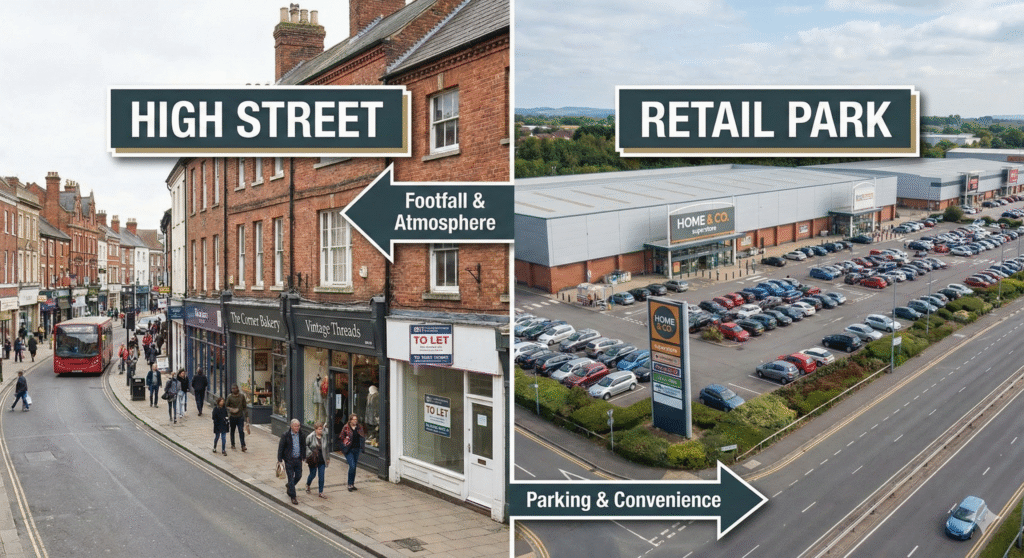
- Natural Footfall: You get a steady stream of passers-by, including office workers on lunch breaks, tourists, and commuters. You don’t always need to spend heavily on marketing to get people through the door—they are already walking past it.
- Character & Atmosphere: If you are an independent boutique, a vintage store, or a trendy café, the High Street offers “vibes” that concrete retail parks can’t match. Old buildings and quirky architecture help build a unique brand identity.
- Public Transport Links: High streets are hubs for buses and trains, making your shop accessible to non-drivers, students, and younger demographics.
The Cons:
- Parking Headaches: This is the big one. If your customers can’t park easily (or cheaply), they might not visit.
- Logistics: Deliveries can be tricky with narrow roads, pedestrian zones, and limited loading times.
The Case for the Retail Park
Retail Parks (or “out-of-town” centres) are purpose-built for the modern shopper who drives.
The Pros:
- Convenience is King: Free, abundant parking is the number one draw. Customers can park right outside, making it easier for them to buy bulky items (electronics, furniture, weekly groceries).
- Higher “Intent to Buy”: People rarely wander around a retail park just for fresh air. If they are there, they are usually there to spend money. Conversion rates can often be higher than on the High Street.
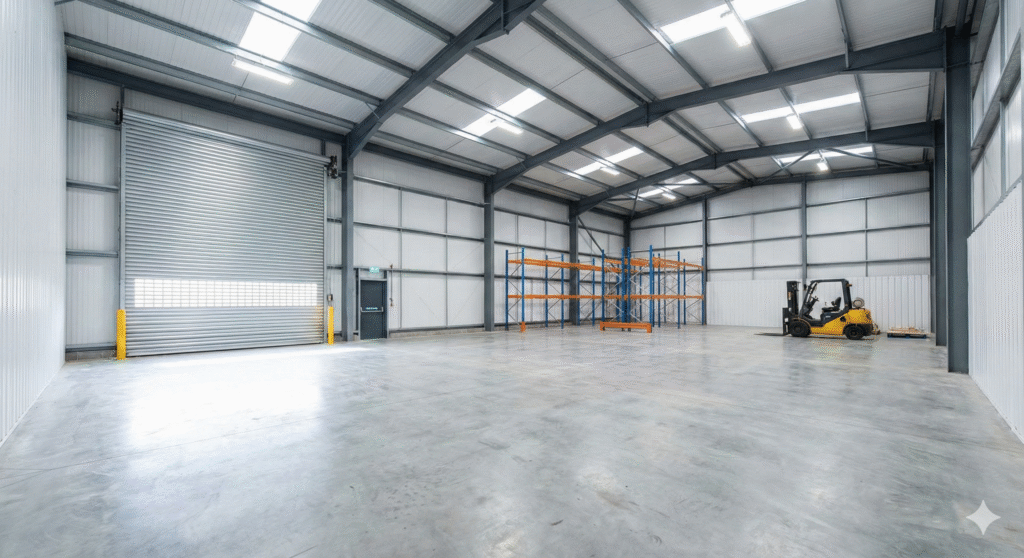
- Modern Units: Spaces are typically large, rectangular “shells” that are easy to fit out, with high ceilings and dedicated loading bays for your delivery trucks.
The Cons:
- Destination Reliance: You are a destination, not a discovery. You need to drive traffic there yourself or rely on the pull of big “anchor” tenants (like a massive supermarket or DIY store).
- Lack of Soul: It can be harder to create a “community” feel or a unique brand atmosphere in a standard metal-clad unit.
High Street vs Retail Park: Which is Right for You?
- Choose the High Street if: You sell impulse buys, gifts, fashion, or food. If your business thrives on atmosphere and browsing (e.g., a coffee shop, a florist, or a barber), the town centre is your natural habitat.
- Choose a Retail Park if: You sell heavy or bulky goods (furniture, appliances, pet supplies) where customers need a car. It’s also ideal if your business is a “destination” that people plan to visit in advance, such as a gym or a showroom.
Find Your Ideal Shop with OffiScout
At OffiScout, we list prime retail opportunities across the UK. Whether you want a quirky unit in Nottingham’s Lace Market or a spacious showroom with ample parking in a Leicestershire business park, we can help you find your shop window.