Commercial Lease vs. Licence to Occupy: Which is Right for Your Business?
Commercial Lease vs. Licence to Occupy: Which is Right for Your Business?
Finding the perfect office space in the East Midlands isn’t just about “location, location, location.” Before you pick out the furniture or debate who gets the window desk, you need to navigate the legal paperwork.
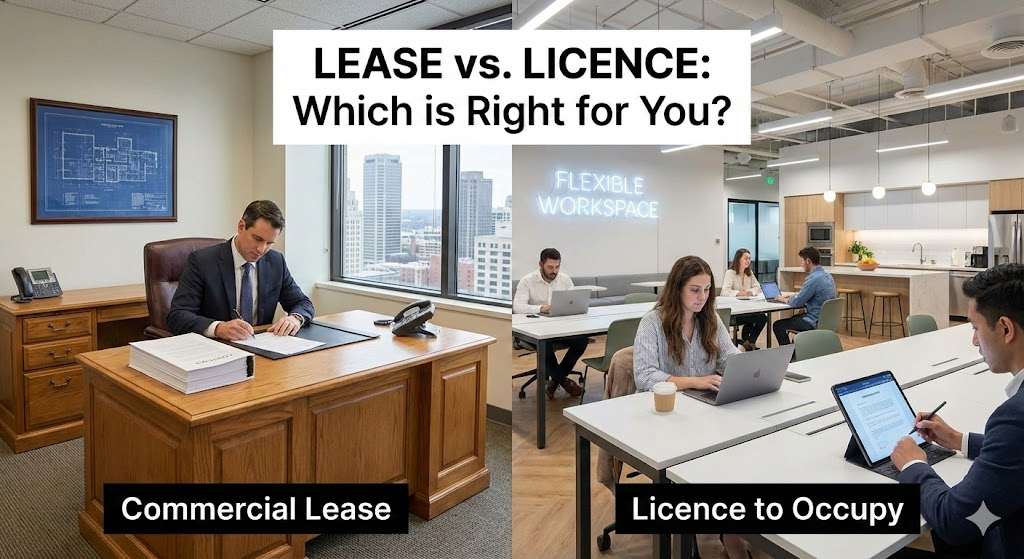
One of the most common stumbling blocks for business owners is understanding the difference between a Commercial Lease and a Licence to Occupy.
While they might look similar on the surface—both allow you to set up shop in a building—they offer vastly different rights, responsibilities, and levels of flexibility. Whether you are looking for a serviced office in Nottingham or a retail unit in Leicester, choosing the wrong agreement can lock you into terms that don’t suit your business growth.
Here is the plain-English guide to the Lease vs. Licence debate.
What is a Commercial Lease?
A lease is a formal, legally binding contract between a landlord and a tenant. It grants you exclusive possession of the property for a fixed period (usually 3–10 years).
Think of it like owning the space for a set time. You have the right to control who enters, you can often make alterations (fit-outs), and you have security of tenure (meaning it’s harder for a landlord to evict you).
Best for:
- Established businesses with stable growth forecasts.
- Companies that need to brand their space heavily (e.g., painting walls, installing signage).
- Retailers or industrial businesses needing long-term security.
The Pros:
- Security: You are protected by the Landlord and Tenant Act 1954 (unless you contract out), giving you the right to renew.
- Control: It is your space. You dictate the layout and operations.
- Cost Stability: Rents are fixed for long periods, often with agreed review dates.
The Cons:
- Inflexibility: You are usually locked in for years. Breaking a lease can be expensive and difficult.
- Hidden Costs: You are often responsible for repairs, maintenance, and business rates.
- Long Lead Times: It can take months of legal negotiation to sign a lease.
What is a Licence to Occupy?
A licence is simply permission to use a property. It does not grant exclusive possession. This is the standard agreement used for serviced offices, co-working spaces, and short-term pop-up shops.
Think of it like a hotel booking. You have a room, but the hotel management can enter to clean it, and they can ask you to move to a different room if needed.
Best for:
- Startups and SMEs scaling quickly.
- Freelancers and remote teams needing a “hub.”
- Businesses wanting “plug-and-play” offices with zero hassle.
The Pros:
- Maximum Flexibility: Terms can be as short as 1 month. If your team doubles in size, you can move to a bigger office next door; if you downsize, you aren’t stuck paying for empty desks.
- Speed: You can often view a space on Monday and move in on Tuesday.
- All-Inclusive: One monthly fee usually covers rent, rates, Wi-Fi, cleaning, and coffee.
The Cons:
- No Security of Tenure: The provider can usually give you short notice to leave.
- Zero Control: You cannot knock down walls or typically rebrand the space.
- Higher Monthly Cost: You pay a premium for the flexibility and inclusive services.
The “Exclusive Possession” Test
The golden rule in UK property law is Exclusivity.
If the landlord has keys and can enter your office at any time to clean or inspect without your specific permission (typical in serviced offices), you likely have a Licence.
If you can lock the door and the landlord needs to give 24 hours’ written notice to enter, you likely have a Lease—even if the piece of paper says “Licence” at the top!
Which One Should You Choose?
- Go for a Licence if: You are a startup, a fast-growth tech company, or you need temporary space while renovating a permanent HQ. If you are looking at serviced offices in Derby or co-working spaces in Leicester, a licence is the industry standard.
- Go for a Lease if: You are an established retail store, a factory, or a corporate HQ that needs total control over security and branding for the next 5+ years.
Summary Comparison
| Feature | Commercial Lease | Licence to Occupy |
| Duration | Long-term (3–10+ years) | Short-term (1–12 months) |
| Flexibility | Low (Hard to exit early) | High (Easy in, easy out) |
| Maintenance | Tenant usually responsible | Provider responsible |
| Setup Cost | High (Legal fees, fit-out, deposits) | Low (Deposit + first month rent) |
| Best For | Retail, Industrial, Corporate HQ | Serviced Offices, Startups, Co-working |
Find Your Perfect Space with OffiScout
Whether you need the stability of a lease or the agility of a licence, the East Midlands market is full of hidden gems. At OffiScout, we list everything from flexible serviced offices in Nottingham city centre to expansive industrial units in Northamptonshire.